I am always a little surprised when people don't know about the crazy shit in their own state. I don’t mean about politics because that is raining on us everyday. And as someone who lived in Texas for over a decade I can confidently say that politics is not crazy fun shit. Just crazy shit.
No. What I mean is its myths, legends, history, and lore. Every place has them, and every place is filled with things strange and wondrous, big and small.
Minnesota is no exception. In fact, Jon Stewart once referred to Minnesota as “crazier than you think” and he quite accurately hit the nail on the head with that statement.
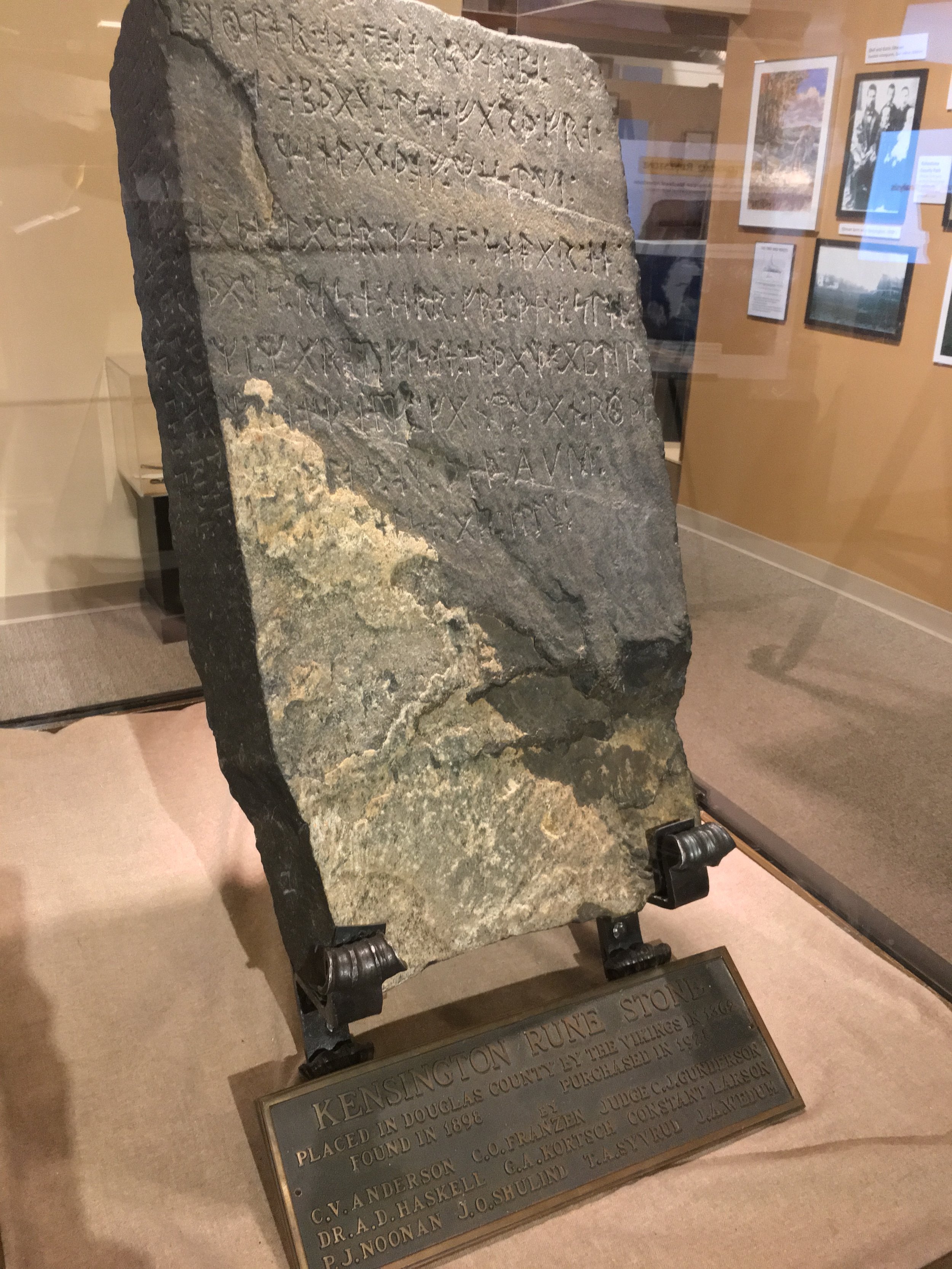
One of the odder pieces of Minnesota history involves a very large stone.
Named the Kensington Runestone, it was uncovered by Oolof Ohman, a farmer in rural Solem, Douglas County, Minnesota, in 1898. (The stone is named for Kensington, MN, the nearest town). It weighs 202 lbs. and was supposedly found under an aspen tree by Oolof and his son. Currently on display at the Runestone Museum in Alexandria, MN.
And I write “supposedly" because it is highly contentious whether this is real or not. A lot of people say it’s not and a lot others say that it is. But whether it is or not, it’s still part of Minnesota’s myth and history. Absolutely worth going to see.
It is carved with Viking runestone symbols that at the time had fallen far out of use in this part of the world. It is argued that Oolof, who had nothing higher than a grade school education, would not have been able to know these 14th century markings. What’s more, the markings themselves are not just the usual runestone symbols used 500 years before the stone’s discovery, but there is also an underlying code in them. Additionally, if it is real, it would indicate that the Vikings had made it further inland, and earlier than first thought. But the whole of time is a very large concept and its continuous shifting to fill in missing pieces should no longer surprise us, yet it still does for some reason.
Oolof insisted throughout his life that he did not fake this stone, and it cost him dearly. One of his children committed suicide over the humiliation and ridicule the family endured. Another left home to never return or speak to the family again.
There is great deal more information out there about the debate, but what I will tell you more about is the museum itself, because it offers up a few surprises of its own.
Rumored to have been a favorite Minnesota haunt of Neil Gaiman (seems likely, given his fascination with folklore and mythology) it is also home to an impressive collection of regional Native American artifacts that were gifted to a doctor throughout his career in exchange for helping care for the community around him. They filled his office, basement, and home.
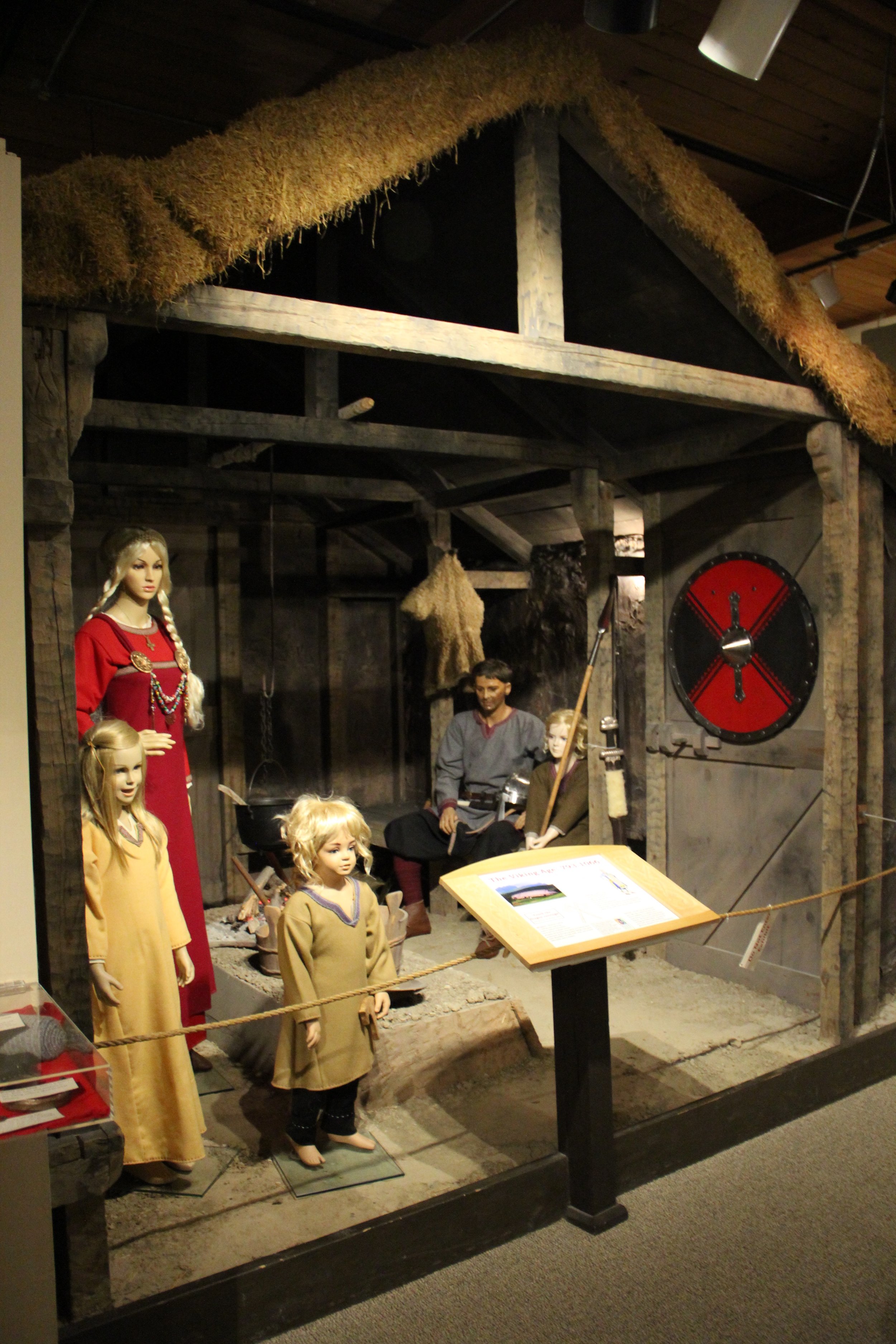
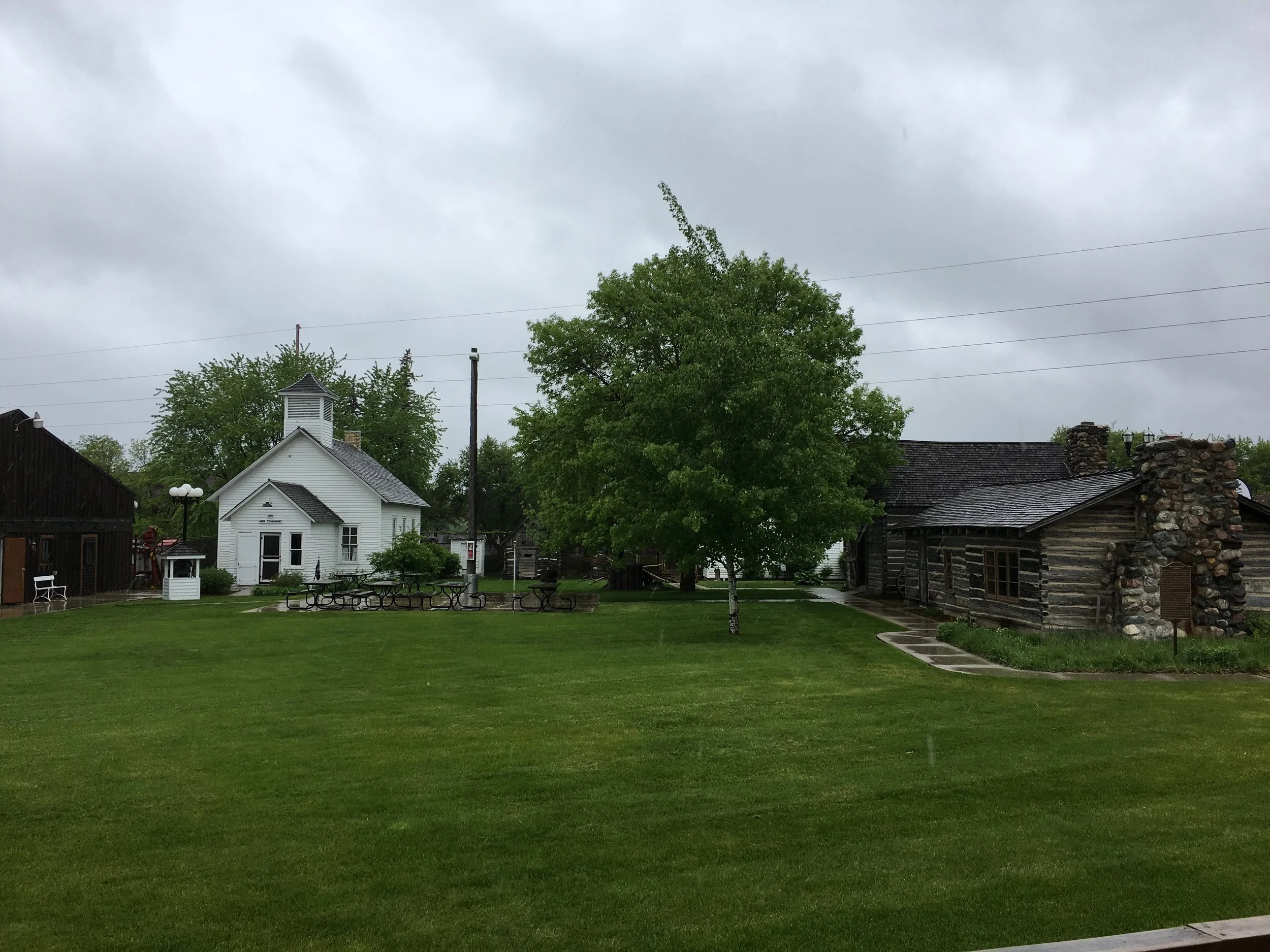
Additionally there is an extensive collection and timeline set up about Pioneer life focused specifically on Minnesota’s Scandinavian roots. It culminates into an entire mock town set up outside the main building that has a pioneer shop, church, town hall, home, as well as… a building that is home to an almost life-size replica of a Viking merchant ship.
There is also a section coming together that looks to be filled with geologic information about Minnesota that includes paleontology about the region.
(The museum is also not far from the delightful Carlos Creek Winery - more on that later, and the spoiled, caviar-eating cats.)
Strange enough to make it onto Atlas Obscura , you should definitely put it on your weekend road trip bucket list.